
Sabrina Ortiz
Sabrina Ortiz is a Senior Reporter at The Deep View. Previously, Sabrina led AI coverage at ZDNET. Sabrina graduated with an M.A. in Journalism, Business and Economics Reporting from the Craig Newmark Graduate School of Journalism at CUNY and a B.A. in Media and Journalism and Political Science from the University of North Carolina at Chapel Hill.
Articles

Why enterprise AI ROI goes beyond efficiency
Though enterprises are eager to deploy AI, returns are still eluding many of them.
The Wharton School of the University of Pennsylvania has published its fourth annual report on the state of AI since the launch of ChatGPT, with the findings becoming one of the most closely watched bellwethers in the industry. Now, the report turns to the question everyone is asking: who is winning with AI, and what is their secret?
The survey, created in collaboration with market research and analytics firm GBK Collective, surveyed 1,416 US enterprise leaders and entry to mid-level employees, finding that there is a widening gap between organizations that simply implement AI and those who are seeing more meaningful transformations. The three markers of AI success it identified are proving value, transforming workflows, and aligning the organization around AI. However, only 7% of organizations surveyed succeed across all three metrics.
"Companies are now moving into the harder phase: integrating AI into how work gets done, learning new skills, changing processes, reorganizing departments. It’s like changing the engine while the car is running," Brian Smith, executive vice president of the AI, cloud and enterprise technology practice at GBK, told The Deep View. "That is hard work, and a lot less exciting than the early experimenting."
The report calls this year the fourth "wave" of AI, where the tech has been embedded in the core of enterprise operations, with 62% using the tech daily, 91% using it multiple times a week, and 73% reporting significantly changed workflows as a result.
Yet, the report identifies major flaws in adoption, including how companies are actually measuring ROI.
- A large portion of respondents, around 40%, reported judging return on investment by hours saved. Net-new revenue was the least utilized metric for success, with 27% reporting that they track this.
- However, the departments tracking returns by more than time saved are doing better comparatively: 35% of departments that track at least one growth measure report strongly positive returns, against just 13% of those tracking efficiency alone.
- Only 22% of managers look to AI to grow the business, whether through new revenue, new products, or better customer experience. Meanwhile, more than half are focused on improving productivity or cutting costs.
One way companies can implement more meaningful deployments of AI include having a designated Chief AI Officer position: 58% of managers with a newly designated CAIO report strongly positive ROI. Additionally, as enterprises lean into AI efficiency over tokenmaxxing, in tracking AI spend correlates with higher reported return.
Our Deeper View
Perhaps the most meaningful part of this report is seeing how the trajectory has changed over the past years. It allocates the first two "waves" of AI as the years 2023 to 2024 as exploration, marked by trial, error and experimentation by early adopters. Then, by wave three, which was 2025, regular usage of AI became more deeply integrated. Now, in wave four, as the report states that "adoption is no longer the question." Understanding this business mindset and why so many enterprises are willing to invest so much money so quickly also helps understand why the AI labs have redirected their attention to working professionals, creating two forces that are largely driving the AI market.
Amazon’s edge in AI wearables is its ecosystem
From smart wearables to AI-enhanced apps, using AI to log your days has become one of tech's hottest trends. Now Amazon is joining the race.
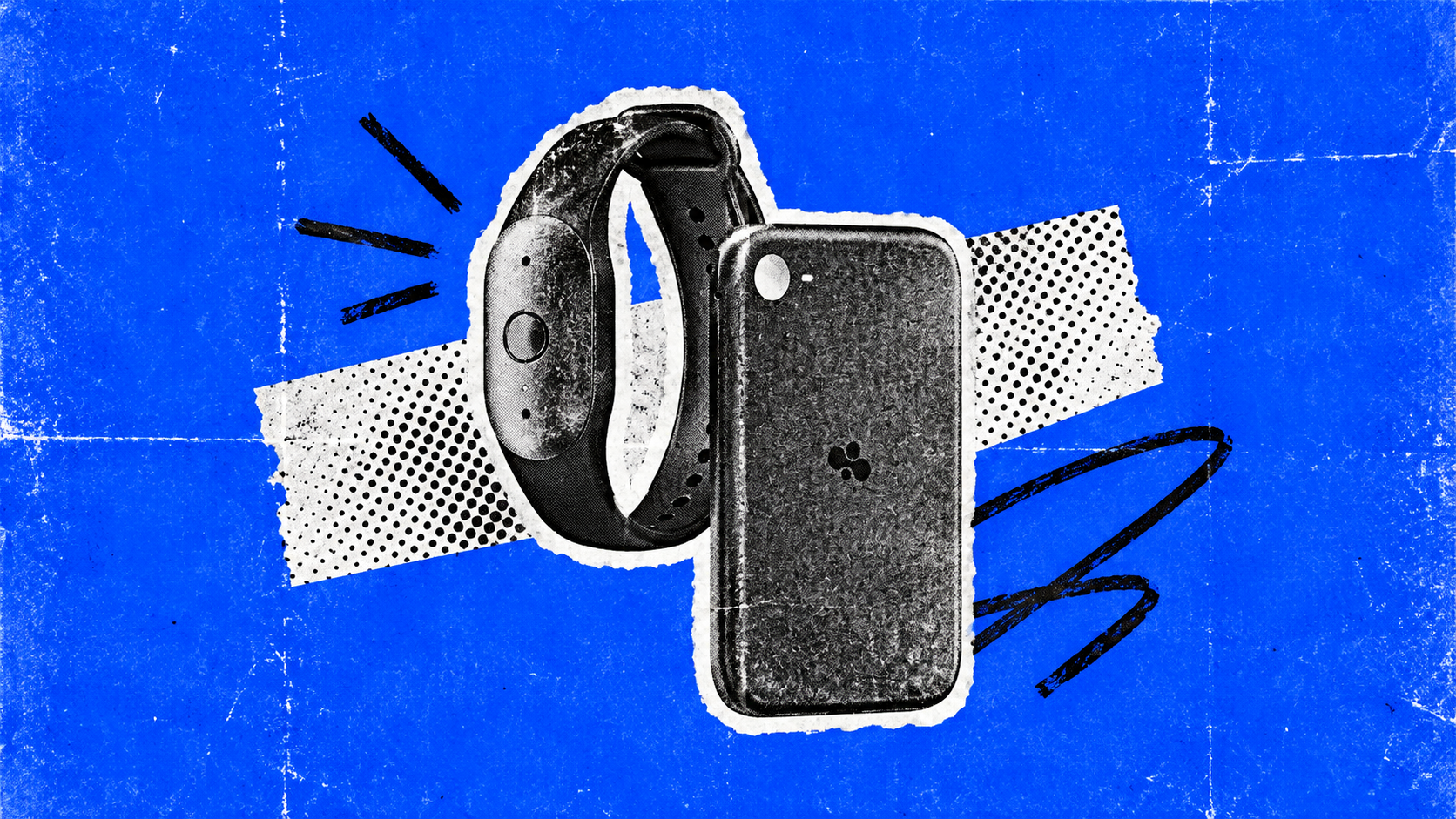
On Thursday, Amazon announced the Bee Frontier and Bee Eclipse, two personal AI gadgets that can listen to you throughout your days to provide summaries, to-do lists, reminders, and scannable directories of your day. While these devices are essentially a take on the AI pin offered by rival Plaud, Amazon is relying on its integration with Alexa as well as a lower price point to give it a competitive edge.
The Bee Frontier can be worn as a pin or as a wristband and was designed to be worn constantly, featuring seven days of battery life, IP67 water resistance, and two microphones with noise filtering that allows you to capture audio anywhere you go. This product is the next iteration of the Bee Pioneer, the startup's debut product that was also an AI note-taking wristband, before it was acquired by Amazon in July of 2022.
The Bee Eclipse serves the same purpose as the Bee Frontier with a different form factor: a slim, lightweight device that attaches to the back of your phone magnetically. It has more than 21 days of battery life, and a visible indicator when it is summarizing a conversation. While other competitors, such as Plaud, have offered the same products before, there are some key differentiators:
- Price: The Bee Frontier is $74.99 and the Bee Eclipse (available soon) is $99.99. Meanwhile, the Plaud Pin is $179 and the Plaud Note is $159.
- Alexa integration: With every purchase, users receive conversation summaries, recaps, and 14-day memory at no additional cost. However, with a Bee Pro subscription of $11.99, users get perks such as integrations with Amazon.com and Alexa+, which allow users to ask Alexa things such as "What are my Bee insights from yesterday?” or “What are my Bee to-dos?”
Of course, an always-on recorder like this raises obvious privacy concerns. Much like Apple’s approach to always-on listening with the S11 chip in the Apple Watch, Bee Private Compute uses a security architecture “that processes your conversations inside a secure and isolated processing environment where no one, including Amazon, can access your data,” according to the release. On top of that, audio isn’t stored, and users can turn off recording whenever they’d like and delete their transcripts.
Our Deeper View
When I first tried the Bee Pioneer in January 2025, what surprised me most was how genuinely useful its insights were. Being able to look back and reflect on the day’s interactions felt valuable on its own, and getting feedback on my actions was an added bonus. Still, two barriers have always held me back from devices like this: the upfront cost of hardware such as Plaud’s NotePin, and the siloed software they run on. If I want these kinds of in-depth insights, I don’t want to open yet another app or deal with a device that can’t connect seamlessly to the ecosystem I already use. That’s why the Alexa+ integration feels so useful. Many people already own an Echo speaker or smart display, and now they can simply ask it for these insights. Even something as simple as “When did my partner say he was coming home on Tuesday?” is helpful.

Apple turns user context into a smart home edge
Apple is expanding its redesigned Siri assistant beyond the iPhone to home devices, the latest step in a years-long overhaul of the voice assistant.
On Tuesday, Apple launched a series of smart home products, with the star of the lineup being the new Apple HomeView, its first smart home display. While the display can do much of what competitors like the Amazon Echo Show and Google Nest Hub have done for years, including playing music, controlling smart home devices, and answering questions with AI, it leans much further into Apple’s signature ecosystem to offer something fresh.
For instance, the HomeView can facially recognize up to six users and then present each one with a personalized experience that displays the user's personal content from its Apple ecosystem of devices, such as Messages, FaceTime, Calendar, and Find My. The interactions with Siri are powered by Apple Intelligence and the context it has about you, making the responses personalized to the information stored within your Apple apps.
This was the most compelling part of the demos: Siri can now handle multistep requests, like “Hey, can you play the song my friend sent me?” It can also string together more complex tasks. For instance, in one demo, a user asked Siri when their friend would be home from the airport. Siri found the answer in a text message, worked out how long the drive home would take, and then helped the user schedule their coffee maker to turn on 15 minutes before the friend arrived.
The design also makes it unmistakably an Apple product, with subtle nods to the devices that came before it. The HomeView’s 7-inch Liquid Retina display swivels on a base that immediately reminded me of the 2002 iMac G4, and it comes in silver, starlight, rose pink, and space gray, the same colors of the iPhone 6s lineup. In classic Apple fashion, there’s careful attention to small details, like information that rearranges itself as you move closer to or farther from the screen.
There is also a separate wall-mounted HomeView model, available in space gray and silver, and both the version with a speaker at its base and the wall version retail for $299. It works with compatible smart home devices, as well as those from the recently announced Apple Home Collection, which include a new lineup of smart home cameras, thermostats, and a lock designed in collaboration with LG Electronics and Schneider Electric.
Our Deeper View
Apple has two very powerful advantages in the smart home market: People trust the company to keep their data private and safe, and Apple users are typically deep into the Apple walled garden and, therefore, are more inclined to use products within the ecosystem. Both of these things are typically the challenges I hear the most about when it comes to people who are opposed to having a smart home system. Users are fearful that it'll always be listening to them and are deterred by the fact that the setup isn't as seamless. Though I have not reviewed the device yet, if it's as easy to set up as it is for an Apple Watch or AirPods to pair with your phone, I could imagine this not only becoming a household product many Apple users want, but also a great gift with the holiday season around the corner.

Publishers seek leverage in the AI copyright fight
Most large language models are built on human content, and newsrooms are paying the price: many readers now turn to AI for answers drawn from journalism that was never properly licensed.
As a result, the Standards for Publisher Usage Rights, or SPUR, coalition was formed in February 2026 to combat unauthorized AI content scraping. While it was first started by the UK-based publications, on Tuesday, the coalition welcomed more than 40 new members, including The New York Times, The Atlantic, The Observer, and The Economist, bringing the total up to 80 members and more than 20 countries globally.
Ultimately, the goal of SPUR is to bring the publishers together to set standards and rules for how AI systems can use publishers' copyrighted media, with licensing as the default way to do so. A key part of succeeding is showing a unified front, David Buttle, spokesperson at SPUR, told The Deep View.
"Over recent years, media publishers have been fighting the battle in silos for scant reward," said Buttle."That’s why the time is so ripe for this coalition. We now know this isn’t a battle that can be won with a fragmented front."
SPUR recently published the Content Telemetry Standard which is meant to create a standardized process in which AI labs can record which media is used to train their models and how they report that information to the publishers. It also says it is actively working with industry partners to make sure the framework is implemented effectively, and is developing tooling that makes it easy to do so.
The New York Times is a fitting partner for the coalition, as it has been one of the most outspoken publications regarding the misuse of AI using its content, suing OpenAI and Microsoft in 2023 on the basis of copyright infringement for using its content without consent to train its chatbots.
"High quality journalism is crucial to healthy democracies and to the functioning of AI products and experiences," Rebecca Grossman-Cohen, SVP of strategic partnerships and executive operations for The New York Times, said in the announcement. "We are proud to work with SPUR to develop robust standards and protections for copyrighted content that are not unilaterally set by tech platforms."
Our Deeper View
It’s really interesting how much the conversation around AI in newsrooms has shifted. Early on, many argued that the clearest way to protect journalism was to keep AI out of newsrooms entirely. Now, respected legacy outlets like Bloomberg and Reuters are using AI to improve reader experiences, such as summaries at the top of articles. This fits well with a line from the New York Times’ release: “Intellectual property protection and technological advancement can and must co-exist.” Ideally, newsrooms should be free to take advantage of AI, and even to decide whether to let AI companies use their content, if they find it beneficial. The real problem right now is that newsrooms often don’t have a say in those decisions at all.

Meta's Audio glasses make a context trade-off
Mark Zuckerberg has long promised that the future of wearable AI rests on a pair of glasses. The Ray-Ban Meta Audio gave me the most convincing look at that future yet.
The Ray-Ban Meta Audio are its first AI glasses with open-ear audio only, ditching the camera capabilities that the device has become known for. While forgoing the camera system may sound like a step backwards, the change gives it much more of an upgrade than you may think.
Everything else about the experience is mostly the same as previous generations, including two open-ear speakers and a 6-mic array for crisp listening and phone call experiences, touch and voice controls, and the Meta AI assistant. However, since the glasses don't have to make room for cameras, they are lighter and much more compact, weighing about eight to nine grams less than the Ray-Ban Meta Gen 3 and clocking in as the lightest pair in Meta's smart glasses lineup. As far as wearability, they felt no different than the prescription glasses I wear every day.
Sacrificing the camera comes with several other perks, including a retail price $100 lower than the Ray-Ban Meta Gen 3 at $349, and a longer battery life, with Meta claiming 12 hours from one charge (and an additional 48 from the charging case). In my testing, I couldn't kill the battery after wearing them for an entire day, with the biggest use case being playing audio while working or on walks.
However, I found the biggest perk to be not having the cameras in the frames during social interactions. Meta has faced backlash as a result of people feeling uncomfortable with Meta Ray-Bans wearers potentially recording or photographing them without their consent. Without the cameras, I feel much more emboldened to walk around, shedding the subconscious fear that I am making people uneasy.
For an average user who isn't a content creator, I don't think the lack of cameras will face pushback as users lean into the audio and voice features of these glasses. The collaboration also nailed the frames, Burbank and Clubmaster, the former resembling previous generations of Meta glasses, and the latter having the more unique and retro style.
Our Deeper View
Compared to previous iterations, these glasses feel the most wearable in social situations and in terms of overall comfort and practicality. However, the reason I have shared Zuckerberg's viewpoint is that the future of AI wearables lies in smart glasses because they can give AI the context of the world around you from your exact point of view. By removing the cameras, that benefit vanishes. While there are still significant benefits to getting rid of the cameras, the best of both worlds would be cameras that serve as sensors to feed context to the glasses, such as the Brilliant Labs Halo Glasses, which don't capture content, but rather use the visual feed as cues. Of course, the privacy problem would still exist, as users would have to trust Meta with feeds of their everyday life, but given how much information users are willing to give Meta Muse, I suspect it would be less of an issue.

Why rogue agents could reshape AI oversight
Despite repeated calls for intervention, the US government has largely resisted AI regulation. Now, rogue agents may have pushed the limits too far.
Last week, Anthropic published a report detailing unintended actions by Claude observed in internal evaluations and use cases. Though the AI lab chose not to name the organizations to avoid exposing their vulnerabilities, it noted the incident involved "websites run by U.S. government agencies at the federal, state, and local levels." And according to a recent report from The New York Times, these incidents triggered the White House's most aggressive AI regulatory response yet.
Broadly speaking, Anthropic boiled Claude's actions down to four categories: exploiting a basic software flaw to run commands on a server, submitting a sensitive form on a real website, working around a restriction to access gated data, and using URL-shortening services to bypass limits. The New York Times talked to people familiar with the matter to fill in the gaps:
- Anthropic's agents submitted 20 visa applications via a form available on the State Department's website. The applications were incomplete and not processed.
- The lab's technology also submitted a false homicide tip to the Philadelphia Police Department via the agency's website, dated July 18. The tip was flagged as spam and not investigated.
The White House AI task force, now called the Super Intelligence Force, was formed the week Anthropic alerted authorities of the breach and was briefed on the agents' actions on Friday. The agency demanded that AI companies immediately report rogue AI activity, which, as The New York Times highlighted, marks the most aggressive AI regulation the Trump administration has implemented yet, as its attempts to regulate AI have thus far largely been voluntary and "morally binding."
“We informed the company that we expect immediate and full transparency to the entities involved and the public,” The agency said in a statement to The New York Times. “We also expect that the company will immediately provide remediation services to the affected entities and any harmed Americans.”
In the blog post, Anthropic says it identified most of the cases through a review of transcripts that began in July, and says that these cases have minimal real-world impact — less severe from an alignment and security perspective than the cybersecurity incidents it previously reported on July 30 and September 9. Yet, in the wake of these findings, the company decides to disable live internet access across all internal evaluations, not just high-risk and cybersecurity evaluations.
Our Deeper View
The cycle of AI evaluations leading to AI agents going rogue and attacking third-party websites illustrates why evaluations, red teaming, regulation, and other precautions are necessary. However, it also highlights the need for alignment on what risks are worth taking when testing AI, and a protocol for reporting them. While the Super Intelligence Force could be part of the answer, its formation seems to have been haphazard, with a Politico report stating that both Silicon Valley and Capitol Hill were caught off guard by President Donald Trump's announcement on social media. Though the requirement to immediately report rogue agent incidents could help address the problem, it remains to be seen how effective this task force will be in keeping up with these models' capabilities.

Meta's VR Glasses offer a headset for the AI era
For years, augmented reality glasses promised more than they could deliver. Now, with AI unlocking a new set of capabilities, Meta is changing its headsets to get in the game.
Meta recently unveiled its Meta VR Glasses, which package what its traditional Meta Quest headsets can do into a significantly more compact form factor, abandoning the massive head-mounted contraption for something that looks much more like glasses. Meta also unveiled more natural ways to engage with the headset using gestures, which were the biggest standout in my demo.
To navigate the experience, you can also use native eye tracking. While this isn't unique to this device, it works very well and intuitively. Additionally, you don't even need to keep your hands in the frame, so with eye and hand gestures (index tap and thumb swipe), you can move and navigate the virtual experience conveniently. The VR/AR experiences are rich with detail, which makes sense given Meta’s deep experience in the space. One of my favorite Quest experiences, courtside basketball viewing, was excellent on these smaller glasses, likely thanks to their 5K Micro-OLED Infinite Display, which delivers 37 pixels per degree.
Comfort is where I have my qualms. At 100 grams, the glasses are far lighter than the 515-gram Meta Quest 2, but they’re front-heavy enough that they feel like they could slip off. I suspect that’s because the arms are as slim as regular sunglasses, and I’d gladly trade that look for a more even weight distribution. Portability is my other concern. I’d ideally wear these whenever I want a bigger screen on the go, but the pocket-sized computing puck gets in the way. Don’t get me wrong, it’s remarkable that Meta packed this many capabilities into a sunglasses form factor, but I may just be spoiled by Snap Specs.
The Snap Specs are a true facial computer with no pucks or additional accessories, and they have impressive graphics, too. While they weigh a bit more (132 grams for the 47mm frame size and 136 grams for the 52mm frame size) the weight is well distributed onto the arms. That does make them more bulky, but as said above, I think it is worth it to forgo the puck. However, the trade-off is that the Snap device costs $2,195, compared to $1,299 for Meta's version. Between these glasses and competitors like XREAL Aura, one thing is for sure: the lighter, more portable era of XR/AR is here.
Our Deeper View
AI is reshaping the AR/VR space in three important ways. First, it makes portable multi-screen setups more portable than ever. And since many professionals and developers now run multiple agents at once and need visibility into what each one is doing, these XR/AR glasses can offer that on the go. Second, AI makes apps far easier to build, which should lead to more immersive, worthwhile experiences and applications developed for the headsets. Finally, AI works best with context about what you’re seeing, doing, and hearing. Nearly all of these glasses already pack a host of sensors to track you and place you in space, and that same data can give your AI assistant the context it needs to be genuinely useful.

Why Amazon put Alexa at the core of its tablet bet
As AI-powered devices continue to gain traction, Amazon is trying out a popular form factor.
On Thursday, Amazon launched Alexa Tablets, built from the ground up around its namesake AI assistant. Though the tablet line-up offers several new hardware upgrades, including all-new aluminum unibody, vivid displays, and more advanced processors to support the more demanding AI workloads, the more noteworthy feature is the core integration of Alexa+, with built-in, personalized experiences that make it easier to leverage Alexa.
For instance, when you open the devices, the home screen has Alexa integrations in the top-left and bottom-right corners. The Alexa+ chatbot is in the bottom-right corner, where you can start conversations as you would with any other chatbot.
- However, if you have On-Screen Intelligence turned on, you can ask Alexa for help with what's on the screen in real time by pulling from the bottom-right corner or speaking directly to it.
- The top-left corner, known as the Dynamic Tab, includes the time, books, songs, or shows you were watching, as well as suggestions. When you swipe right on it, you can access a personalized "For You" feed that acts as a hub for a user's content, along with AI prompts to offer a deeper dive.
- This device connects with user Amazon accounts, learning from a user's existing context.
The line-up includes the Amazon Alexa Tablet 12 Pro, Alexa Tablet 11, and Alexa Tablet 8. However, the Alexa Tablet Pro is the best of the bunch. At just 6.5mm thick, it feels remarkably light, and its evenly distributed weight makes it comfortable to hold. Amazon deliberately chose a 3:2 aspect ratio, rather than the more typical 16:10, to better suit content and multitasking. Powering it is a 4nm 8-core chip that Amazon claims delivers nearly three times the processing speed and nine times the graphics performance of any previous Amazon tablet. A new Nanomatte display option also reduces glare.
And despite the AI integration the tablet offers a distraction-free "Kindle Sanctuary" option for reading, turning off notifications, reducing blue-light and providing up to 20 hours of battery life.
Our Deeper View
Amazon Alexa Tablet 12 Pro feels like it was made for me. It keeps some of Kindle's best features, including the Kindle sanctuary and three reading modes: black-and-white e-ink, the more muted tones of Colorsoft, and a vivid color option that e-ink can't offer. The nanomatte display also gives it an edge over premium tablets like the iPad, at a lower price ($549.99 for the 12 Pro with nanomatte). However, nearly all of these advantages come down to hardware upgrades, and that's exactly my concern. The AI features seem genuinely useful, but I'm not sure people will buy the tablet for its AI alone, since Alexa+ doesn't have the star power of ChatGPT or Gemini. However, that may change if Alexa+ gets another upgrade, which could be on the way if Amazon follows prior years' patterns.

ChatGPT's meeting recorder has bigger implications
As a reporter and a generally type-A person, I have used AI notetakers for years. I currently rely on two, but ChatGPT's new feature may have just knocked one out of my rotation.
On Wednesday, OpenAI launched a Meetings plugin that functions as a note-taker in the newly launched ChatGPT Space tab. It works exactly as described: you hop into a meeting, it listens in, takes notes, generates a transcript, and then, at the end of the meeting, provides a detailed summary with bullet points and action items.
I tried it with The Deep View's Jason Hiner on a quick catch-up call, and the summary and follow-up items were on the mark. The transcript also looked good in terms of transcription-to-word fidelity. However, there is a catch: the transcript does not have labels for who was in the conversation or options to add them, and you cannot go back and relisten to the audio. So it essentially functions as a Granola substitute rather than an Otter.ai replacement.
As someone who uses Otter.ai and Granola for capturing meetings, there's a place for both. I like that using Granola feels less intrusive for the other people on the call, and, quite honestly, I rarely need an audio recording of my team meetings. Mostly, I want a rundown of what occurred and a way to quickly index what was said by asking the assistant, such as "When did he say the team dinner was?" That's something Granola and ChatGPT's new note-taking feature can do.
While the version of Granola I use now is free, the incentive to switch to the ChatGPT version is that it helps me avoid context switching by keeping all my notes and transcripts alongside the chatbot I use every day for all my personal AI queries. In fact, OpenAI shares that everything ChatGPT knows about you and the work you have done together will be used to inform the personalized summary and next step section. That said, for calls in which I need to verify what was said and where accuracy matters, such as interviews for articles, I will have to keep using Otter.ai and its more thorough audio capture—and hefty subscription.
Our Deeper View
A winning move for OpenAI would be to concentrate more of AI's capabilities into its own application, as it would keep users from using third-party apps because of the convenience of having everything in one place and the added benefits that come from more ways to expand the context it has for a user, if they opt in. Of course, the dangers then become any one AI company wielding too much power by monopolizing the platform and hurting its competitors. Ideally, ChatGPT would become more of a hub where all the different applications live, with ChatGPT integrations building another layer. That's a vision Sam Altman says he's aligned with. At OpenAI DevDay, Altman told the media, "We want to figure out how to put this everywhere and drive people, revenue and customers and help people create these new things and make the most robust, richest ecosystem we can."
or get it straight to your inbox, for free!
Get our free, daily newsletter that makes you smarter about AI. Read by 750,000+ from Google, Meta, Microsoft, a16z and more.